
Why We Track Eye Growth, Not Just Prescriptions, in Childhood Myopia
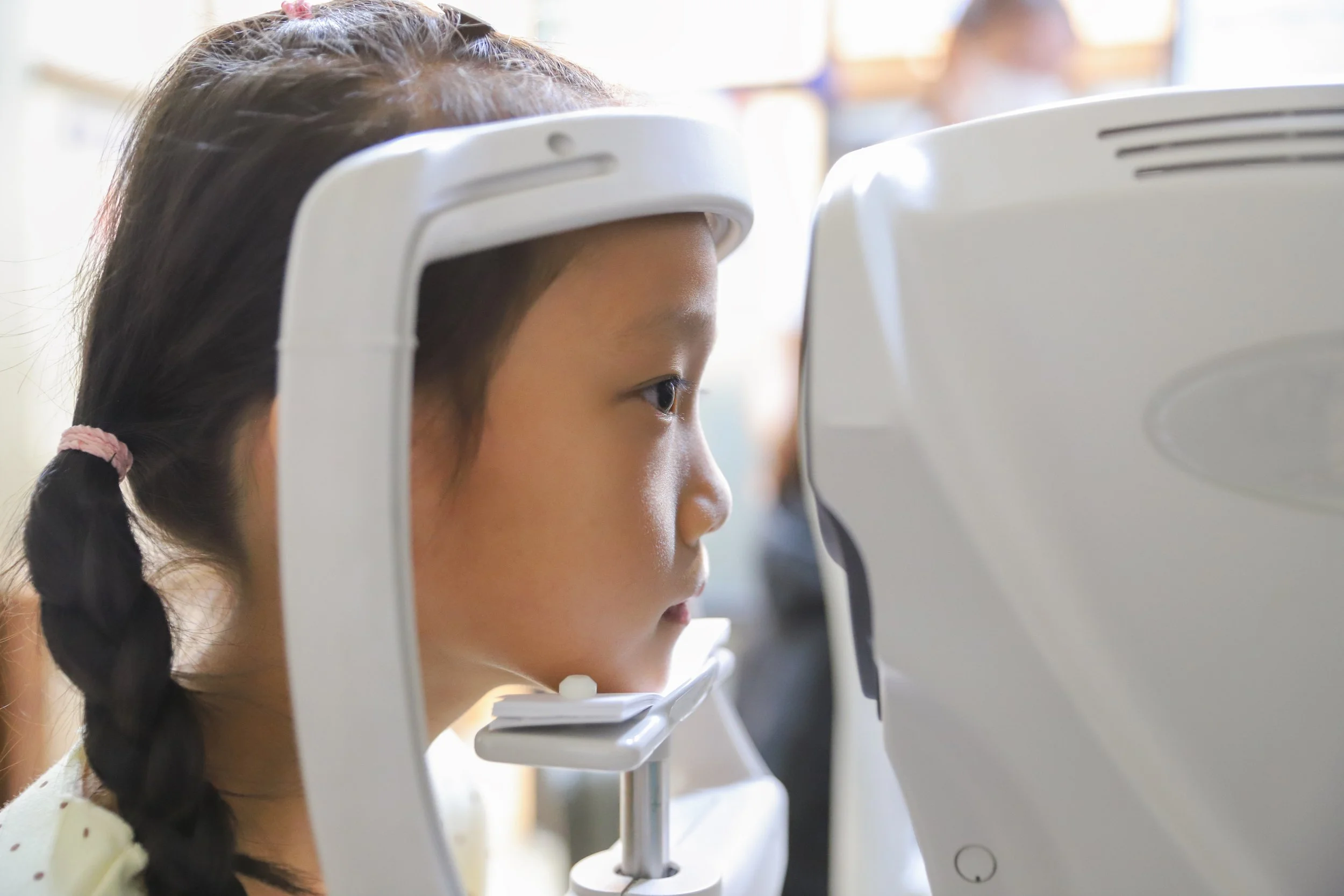
If your child’s myopia is changing every year, the prescription alone doesn’t tell the whole story. At Insight Eye Care, we look deeper, literally, by measuring axial length, the physical growth of the eye, to guide myopia management.
Parents often ask: “Is my child’s eyesight getting worse?”
The better question is: “Is the eye still growing too quickly?”
That’s where axial length measurement comes in.
Why this matters more than most parents realize

Myopia isn’t just about blurry distance vision, it’s linked to how long the eye grows from front to back. Faster eye growth increases lifetime risk for retinal detachment, glaucoma, and myopic macular disease later in life.
International guidelines for myopia care now highlight the importance of monitoring how the eye grows over time, rather than relying only on changes in prescription.¹ That’s why tracking eye growth has become central to how myopia care is delivered today.
What is axial length?
Axial length is the length of the eye, measured in millimeters.
Children’s eyes naturally grow as they age
In progressive myopia, the eye grows too long, too fast
This stretching is what drives increasing myopia and long-term risk
We measure axial length using optical biometry, a fast and comfortable scan that takes just seconds.
Why prescriptions alone can miss the full picture
Glasses prescriptions tell us how blurry vision is today. Axial length tells us what the eye is doing over time.
Here’s why this matters:
A child’s prescription may look “stable”
But the eye can still be lengthening underneath
That silent growth is where future risk comes from
Consensus reports from the International Myopia Institute note that axial length provides a more direct and reliable marker of progression, especially when comparing treatment effectiveness over time.¹ That’s why modern myopia care uses both the refraction (prescription) results and axial length trend data.
How we use axial length at Insight Eye Care
At Insight Eye Care, axial length measurement is part of how we monitor, explain, and adjust myopia care.
We use it to:
Establish a baseline eye growth pattern
Track changes over time, not just year to year
Decide if a current treatment is working
Support conversations with parents using clear data
Rather than reacting only when prescriptions jump, we can respond earlier, while changes are still subtle. That approach aligns with international recommendations and helps families make informed decisions, not rushed ones.
What parents can expect at a myopia monitoring visit
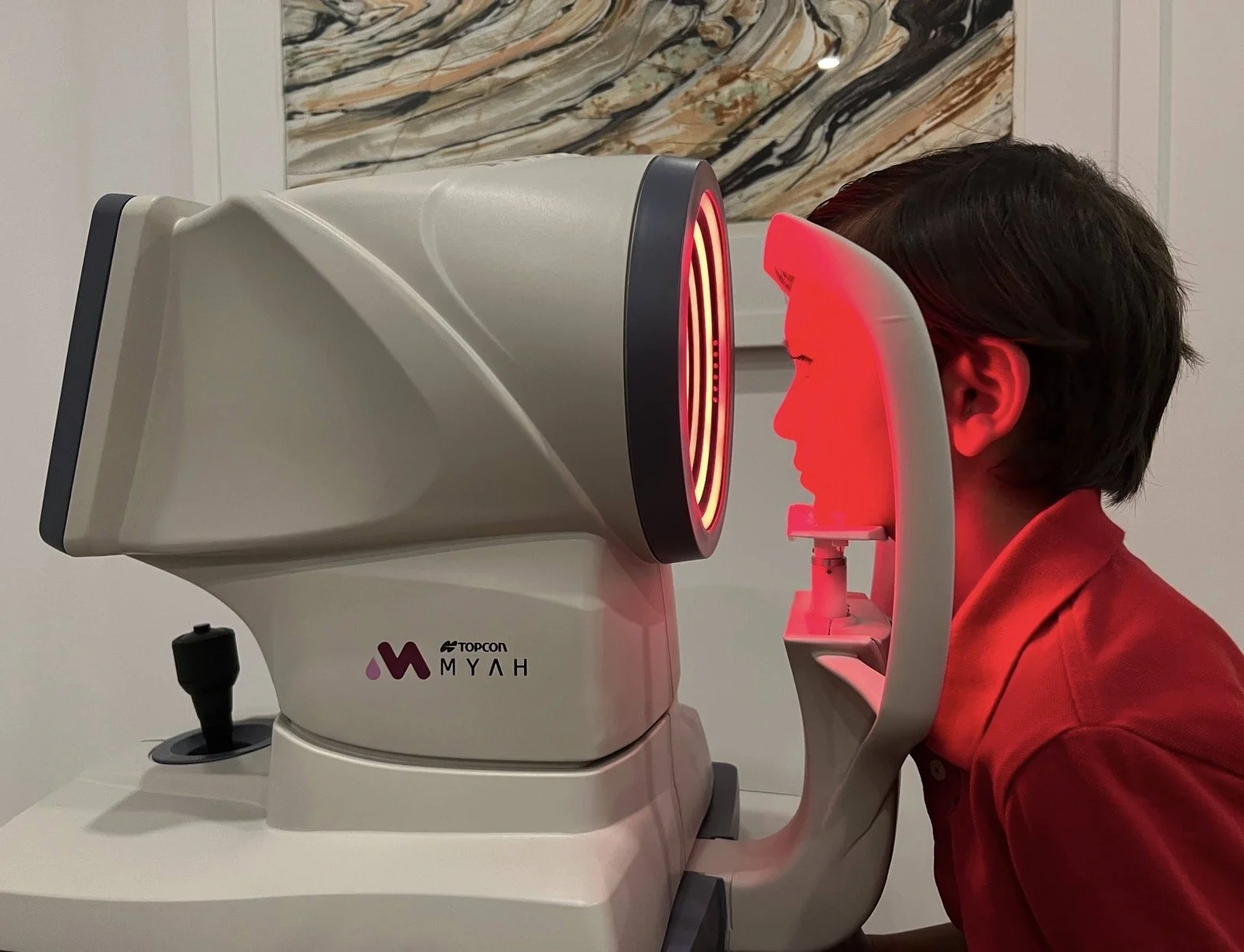
Most families are surprised by how simple this is.
A typical follow-up visit includes:
Non-contact axial length measurement
Vision and prescription check (sometimes with drops that dilate your child’s pupils)
Review of growth trends over time
Discussion of whether adjustments are needed
Follow-up appointments are usually scheduled every 3–6 months, depending on age, risk factors, and prior progression.
How axial length changes treatment decisions
Axial length data helps answer practical questions parents actually have:
Is this treatment doing enough?
Do we need to adjust timing or approach?
Is growth slowing at an expected rate for age?
This data-guided approach is now reflected across many Canadian practices offering evidence-based myopia care.
Why this approach is becoming standard across Canada
Professional organizations and peer-reviewed research increasingly recognize axial length as essential for monitoring risk, not just vision clarity.¹ ² That’s why more clinics are integrating axial length tracking into routine pediatric myopia care.
Where to get axial length based myopia management in Canada
If you’re looking for clinics that include axial length measurement as part of myopia care, here are examples by region:
Waterloo Region Insight Eye Care
Toronto, ON Spadina Optometry and Bay St EyeCare
Ottawa, ON Merivale Vision Care
Winnipeg, MB Waverley Eye Care and Eyes on Bridgwater
Calgary, AB Mission Eye Care
Vancouver, BC Hello Eye Lab
Clinics listed use axial length as part of ongoing myopia monitoring; availability and protocols vary.
Common Questions from Parents
Does getting an axial length measurement hurt at all?
No. It’s quick, non-contact, and doesn’t require drops.
How often does it need to be measured?
Typically every 3–6 months, depending on age and progression risk.
Can it predict future eyesight?
It doesn’t predict exact prescriptions, but it helps estimate risk trends, which is often more important.
Is this only for severe myopia?
No. Monitoring eye growth is not just for severe myopia. Research shows that children with early-stage or moderate myopia, as well as those who are premyopic and at risk of developing myopia, benefit from regular monitoring. This allows eye care providers to detect changes early and take steps to slow progression if needed.
Does this replace glasses or treatment?
No. It supports better decisions about monitoring and management.
Our approach at Insight Eye Care
Our focus is helping families understand what’s happening, not just prescribing solutions.
Axial length measurements allow us to monitor eye growth with clarity, communicate risk in a way that’s easy to understand and adjust care thoughtfully, not reactively.
If you’re concerned about your child’s myopia, or just want clearer answers, this data matters
If you’d like to learn more about axial length tracking and whether myopia management is appropriate for your child, you can book a consultation with our team at Insight Eye Care.

-
iStock photos
Photos of MYAH: Insight Eye Care
Photo of two children playing: Images generated with ChatGPT (DALL·E) by OpenAI
-