
More Than Fresh Air: Why Outdoor Time Is Important for Children's Eyes
Dr. Carolyn MacNeil B.Sc., O.D., Kelly Birch-Baker, RECE, AECEO.C , & Eva May, RECE, AECEO.C
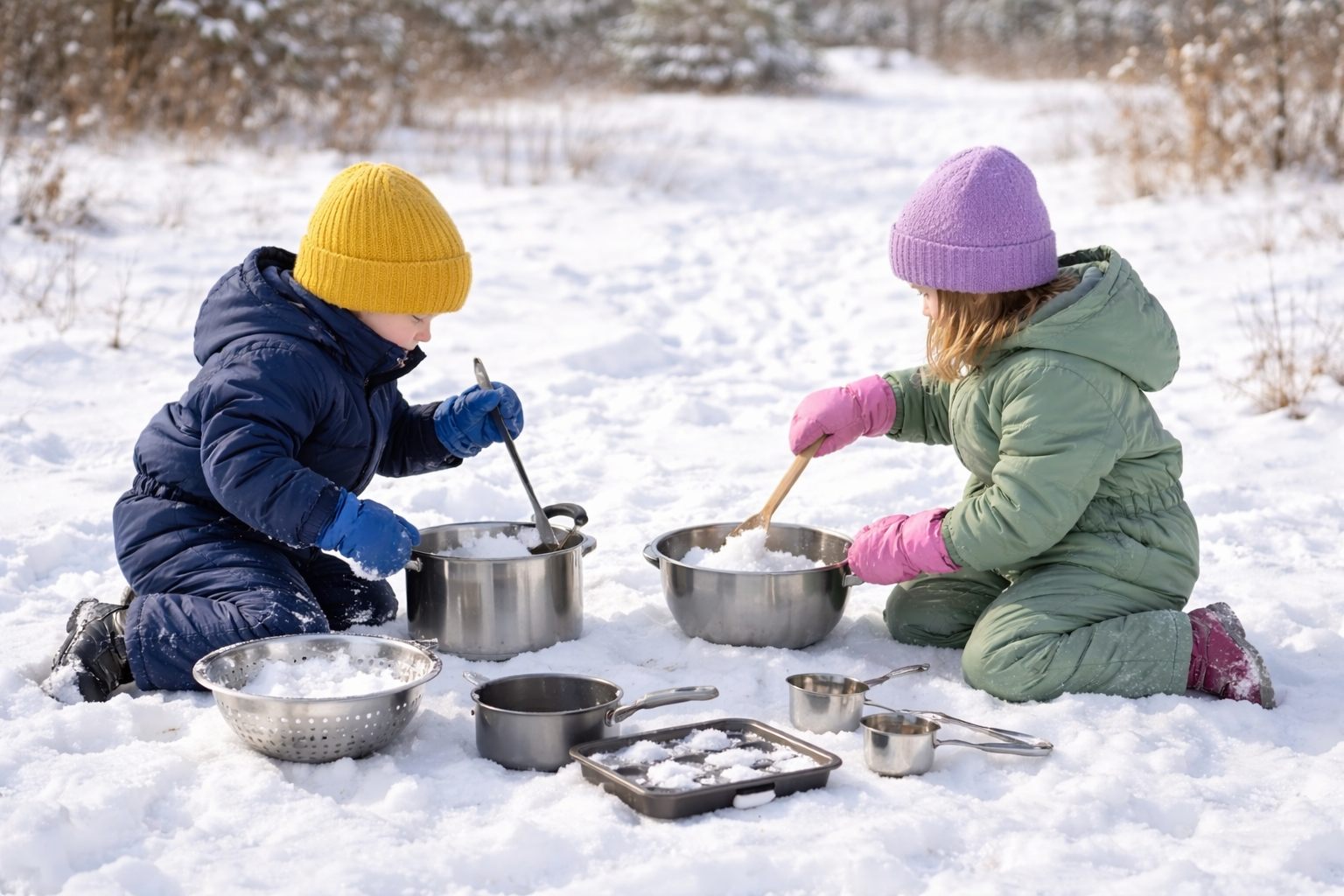
As optometrists, we are seeing more children develop nearsightedness (difficulty seeing in the distance), also called myopia, at younger ages. Research from around the world consistently shows that spending more time outdoors lowers the risk of children developing myopia.¹ ² This matters for families in the Waterloo Region, where winter weather can make outdoor play feel challenging.
So what makes being outside so beneficial for children’s eyes?
Natural daylight is much brighter than indoor lighting, even on cloudy or snowy days. This brighter light stimulates the release of retinal dopamine, which helps regulate normal eye growth and lowers the risk of the eye growing too long, which is the main structural cause of myopia.³ Studies show that children who spend more time outdoors are less likely to develop nearsightedness, as more exposure to natural daylight slows the shift towards nearsightedness.⁴ Myopia also tends to progress faster during months with fewer daylight hours, reinforcing that concept that regular exposure to outdoor light remains important year-round.¹
Another factor that affects children’s eye health is how they use their vision outdoors. Being outside naturally encourages children to look at a variety of distances, including faraway objects. Indoors, many activities involve sustained close focus, like reading, drawing, or using screens. Research shows that spending more time on these close-up tasks, while spending less time outdoors, increases the risk of developing nearsightedness.⁵ ⁶ Children who combine high amounts of near work with limited outdoor time are more likely to become myopic,⁷ highlighting that both behaviours matter for eye growth.⁶
Helping Children Stay Active Outdoors During WINTER
In Canada, winter creates tangible barriers to outdoor play. Shorter daylight hours and cold temperatures can make it tempting to stay indoors. When screen time, homework, and structured activities fill the day, outdoor time often becomes an afterthought. With proper clothing and safe conditions, winter outdoor play remains a simple and valuable way to support children’s eye health.
Early Childhood Educators play an important role in helping children stay active outdoors year round. Eva May and Kelly Birch-Baker, are experienced Early Childhood Educators and Forest School Practitioners from Emmanuel at Brighton Child Care Centre and share practical, age appropriate outdoor activity ideas for families this winter. These examples aim to support children’s physical, emotional, and visual development while making outdoor time feel achievable, even in cold weather.
Dressing appropriately for cold winter weather is essential and the first step to make outdoor time safe and enjoyable for children. It is important to dress in layers starting with a base layer under a child's pants and shirt. Then add a warm sweater and top it off with a full snowsuit, neck warmer, hat and warm, waterproof mittens. Wool socks inside warm, waterproof boots help keep little feet cozy, and in extreme cold, foot and hand warmers can provide extra protection. Remember it is important for the adults accompanying the children outdoors to dress properly as well to ensure outdoor time is fun, and memorable.
Toddlers (18 months to 2 years)
Simple, sensory-rich activities help toddlers explore winter at their own pace.
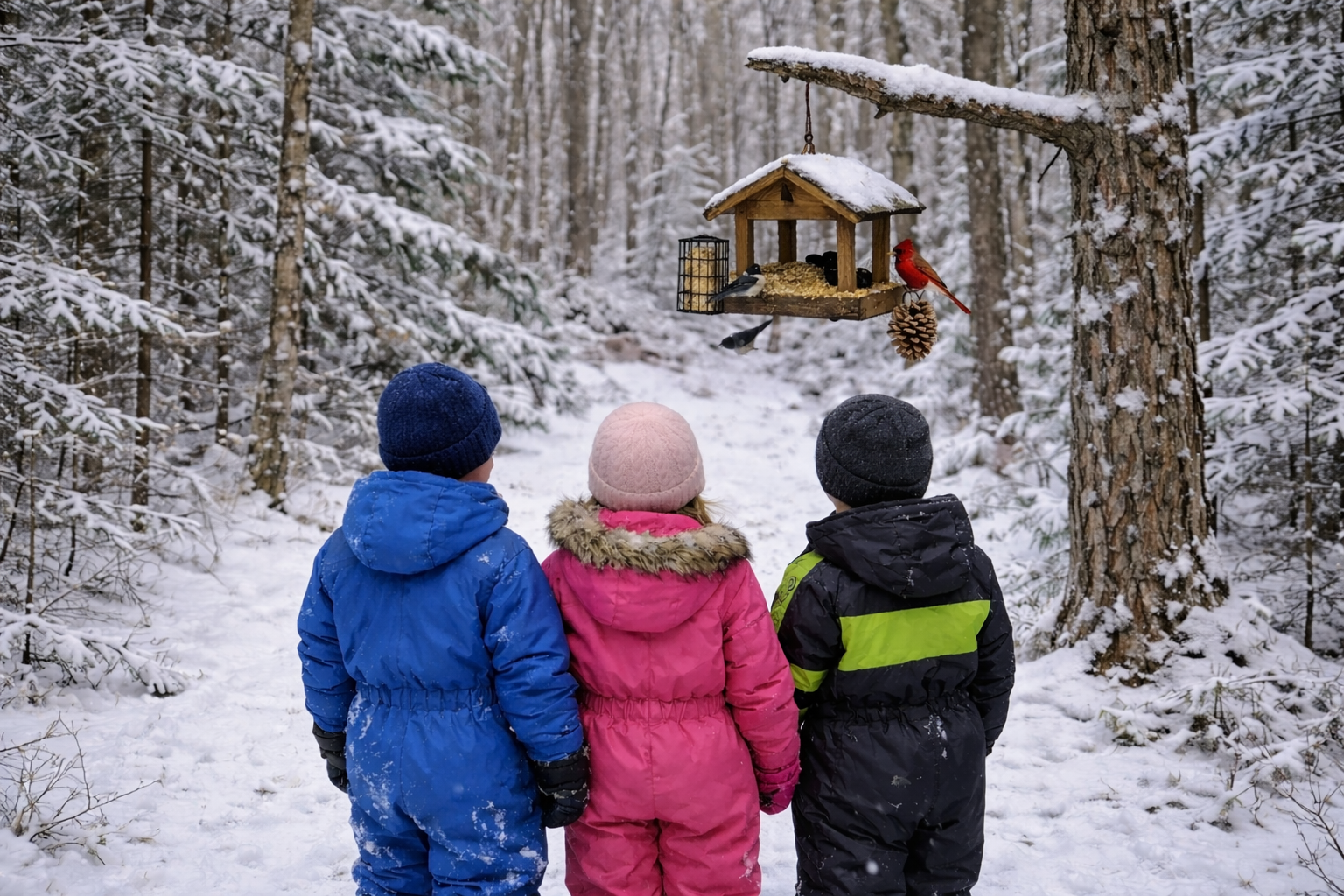
Set up a “snow kitchen” with pots, pans, and spoons
Create frozen bird feeders or sun catchers using pie plates, fruit, and seeds
Colour the snow using dried-out markers
Blow bubbles and watch them freeze in extreme cold
Use toy construction vehicles to create a snowy worksite
Bury small treasures in the snow for digging and discovery
Freeze water outdoors in containers filled with loose materials
Provide large loose parts (tubes, pinecones, sticks, textiles) to build shelters
Create ramps for snowballs and ice to explore gravity
Preschool-Aged Children (3 to 4 years)
Preschoolers enjoy imaginative play and simple challenges that build confidence and curiosity.
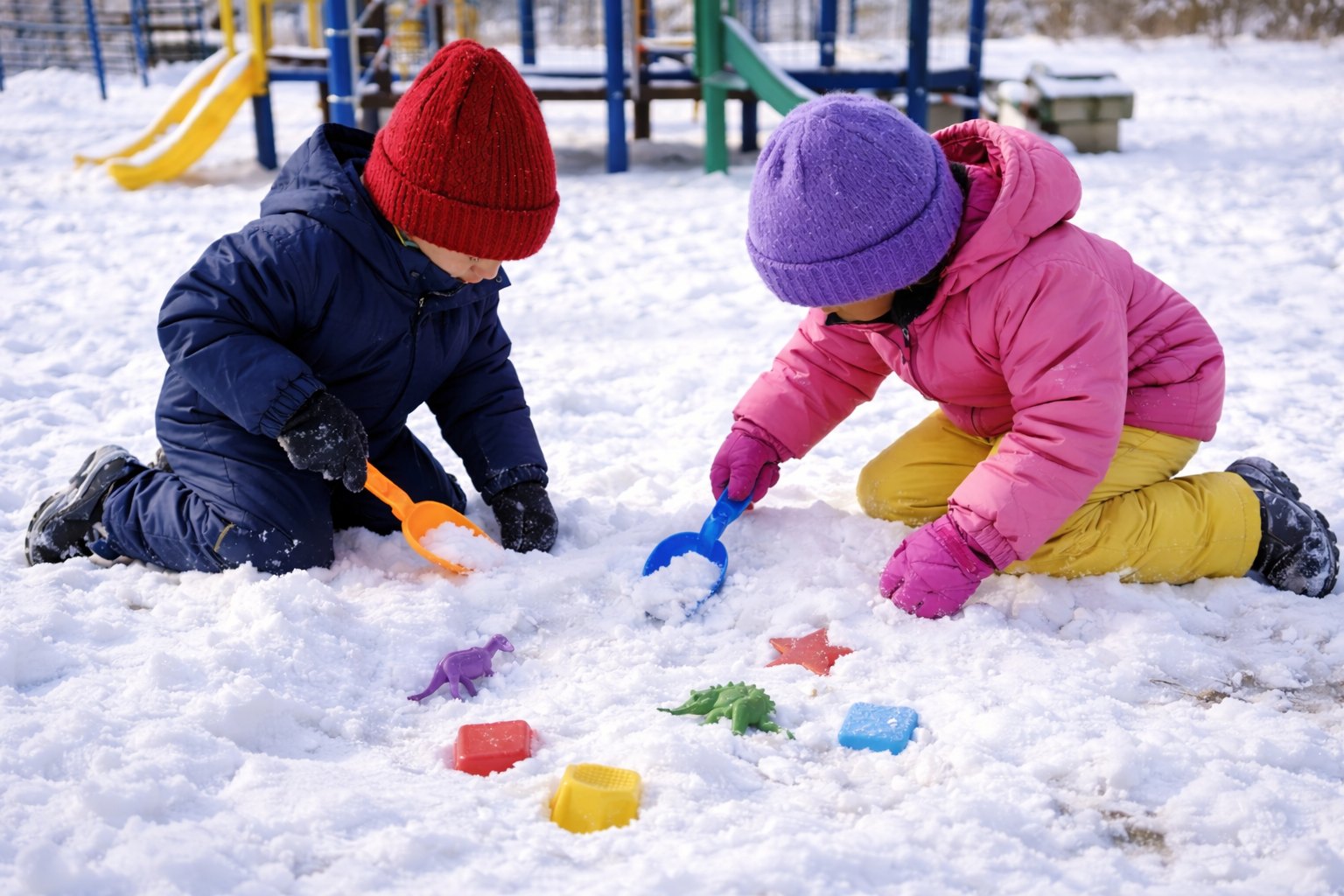
Freeze plastic animals or dinosaurs in ice and “excavate” them like an archaeologist
Go on a family hike with a photo scavenger hunt or nature collection
Identify animal tracks and trees using field guides
Make and observe bird feeders; photograph birds to create a scrapbook
Let children help shovel the driveway
Enjoy a family campfire with hot drinks or s’mores
Create pathways or labyrinths in the snow
Set up a winter treasure hunt or simple geocaching game
School-Age Children (5+ years)
Older children can take on more complex projects and inquiry-based activities.
Create snow sculptures and invite neighbours to contribute
Design obstacle courses using snow and loose materials
Measure snowfall and observe different snowflake patterns
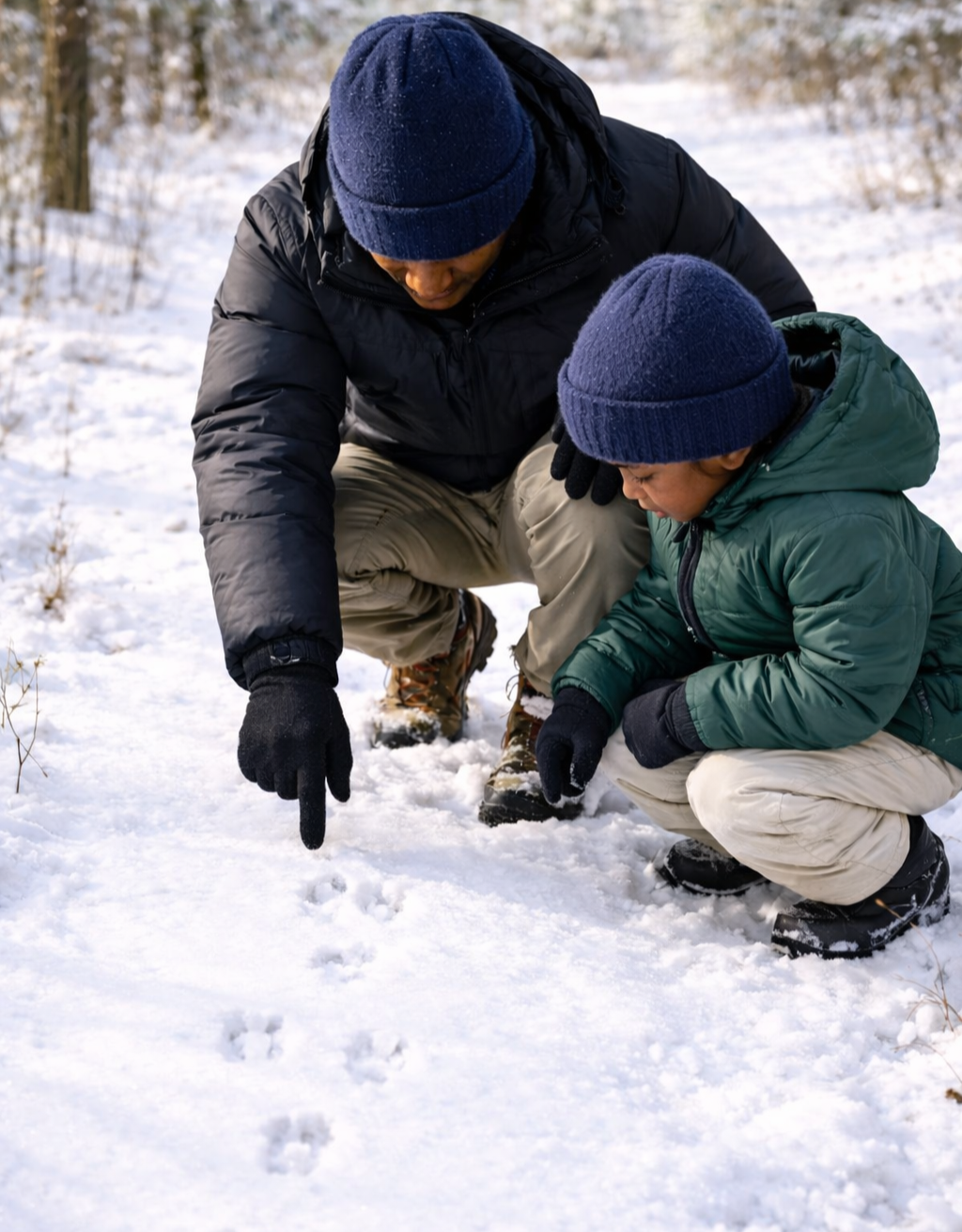
Track animals and identify scat in parks or forests
Make ephemeral art using footprints and natural materials
Build and maintain a backyard skating rink
Go on winter scavenger hunts or geocaching adventures
Play driveway hockey
Visit local winter festivals
Observe and record birds visiting backyard feeders
Outdoor play offers more than fresh air and exercise; it plays a meaningful role in healthy eye development. Even short bursts of outdoor time can make a difference, especially during the darker winter months. By finding safe, enjoyable ways to get outside, families can help protect their children’s vision while creating positive habits that last well beyond winter.
If you’d like to learn more about myopia and whether myopia management is appropriate for your child, you can book a consultation with our team at Insight Eye Care.
-
Images generated with ChatGPT (DALL·E) by OpenAI
-
Xiong, S., Sankaridurg, P., Naduvilath, T., Zang, J., Zou, H., Zhu, J., Lv, M., He, X., & Xu, X. (2017). Time spent in outdoor activities in relation to myopia prevention and control: A meta‑analysis and systematic review. Acta Ophthalmologica, 95(6), 551–566. https://doi.org/10.1111/aos.13403
Chen J, Qi Z, Morgan I, et al. (Accepted for publication) Time outdoors prevents myopia in hyperopic children, but protection is weaker in premyopic children: A post‑hoc analysis of a cluster‑randomised trial. (2025). British Journal of Ophthalmology. Advance online publication. https://bjo.bmj.com/content/early/2025/10/08/bjo-2025-327768
Jagadeesh, D. (2021). Which environmental factors potentially reduce the progression of childhood myopia? Brien Holden Vision Institute. Retrieved from https://bhvi.org/news/which-environmental-factors-potentially-reduce-the-progression-of-childho
Sánchez-Tocino, H., Villanueva Gómez, A., Gordon Bolaños, C., Alonso Alonso, I., Vallelado Alvarez, A., García Zamora, M., Francés Caballero, E., Marcos-Fernández, M. Á., Schellini, S., & Galindo-Ferreiro, A. (2019).. The effect of light and outdoor activity in natural lighting on the progression of myopia in children. PubMed. https://pubmed.ncbi.nlm.nih.gov/30573292/
Pärssinen, O., & Kauppinen, M. (2022). Near work and less outdoor time increases myopia risk: Children who spend more time indoors doing close‑up work and less time outdoors have a higher risk of becoming myopic. PubMed. https://pubmed.ncbi.nlm.nih.gov/34291573/
Wen L, Cao Y, & Cheng Q. (2020). Objectively measured near work, outdoor exposure, and myopia in children. British Journal of Ophthalmology, 104(11), 1542–1548. https://bjo.bmj.com/content/104/11/1542
Pärssinen O, Lassila, E., & Kauppinen, M. (2022). Associations of children’s close reading distance and time spent indoors with myopia, based on parental questionnaire. Children, 9(5), 632. https://www.mdpi.com/2227-9067/9/5/632