FIVE Common Myths You Might Believe
Elizabeth Chiu & Jordyn Tull, Optometry StudentS
Taking care of your eyes starts with understanding how they work. Many common myths about vision and eye health can be confusing or misleading, and we are here to help separate fact from fiction.
1. Wearing glasses makes your vision worse

Wearing glasses does not make your vision worse. Instead, they are tools designed to support and enhance your vision. Glasses are prescribed to help correct conditions such as hyperopia (farsightedness), myopia (nearsightedness), astigmatism, presbyopia, eye turns, and for myopia control.
Changes in vision can occur for many reasons, but glasses play a supportive role in maintaining visual comfort. Wearing your glasses as prescribed helps prevent your eyes from overworking and reduces strain. As for needing a stronger prescription for reading with age, presbyopia is the not so friendly reminder that your eyes are getting older too!
2. Reading in the dark ruins your vision
Reading in the dark does not cause permanent damage to your eyes, but it can increase visual strain. Proper lighting reduces the effort required to focus and improves comfort. While no lasting physical harm occurs, you may experience temporary symptoms such as fatigue, discomfort, or headaches.
3. Colour blindness means seeing only black and white
The term "colour blindness" can be misleading. A more accurate term is colour vision deficiency. While there is a rare form where people see only in black and white, most individuals with colour vision deficiency have difficulty distinguishing between certain colours, most commonly red and green. This means they can still perceive many colours, just not in the typical way.

4. Carrots Are the Only Food That Improves Vision
Carrots contain beta-carotene, which the body converts into vitamin A, an essential nutrient for maintaining healthy vision, especially in low-light conditions. However, they are not the only food that supports eye health, and they will not improve vision beyond normal levels if your vitamin A intake is already sufficient.
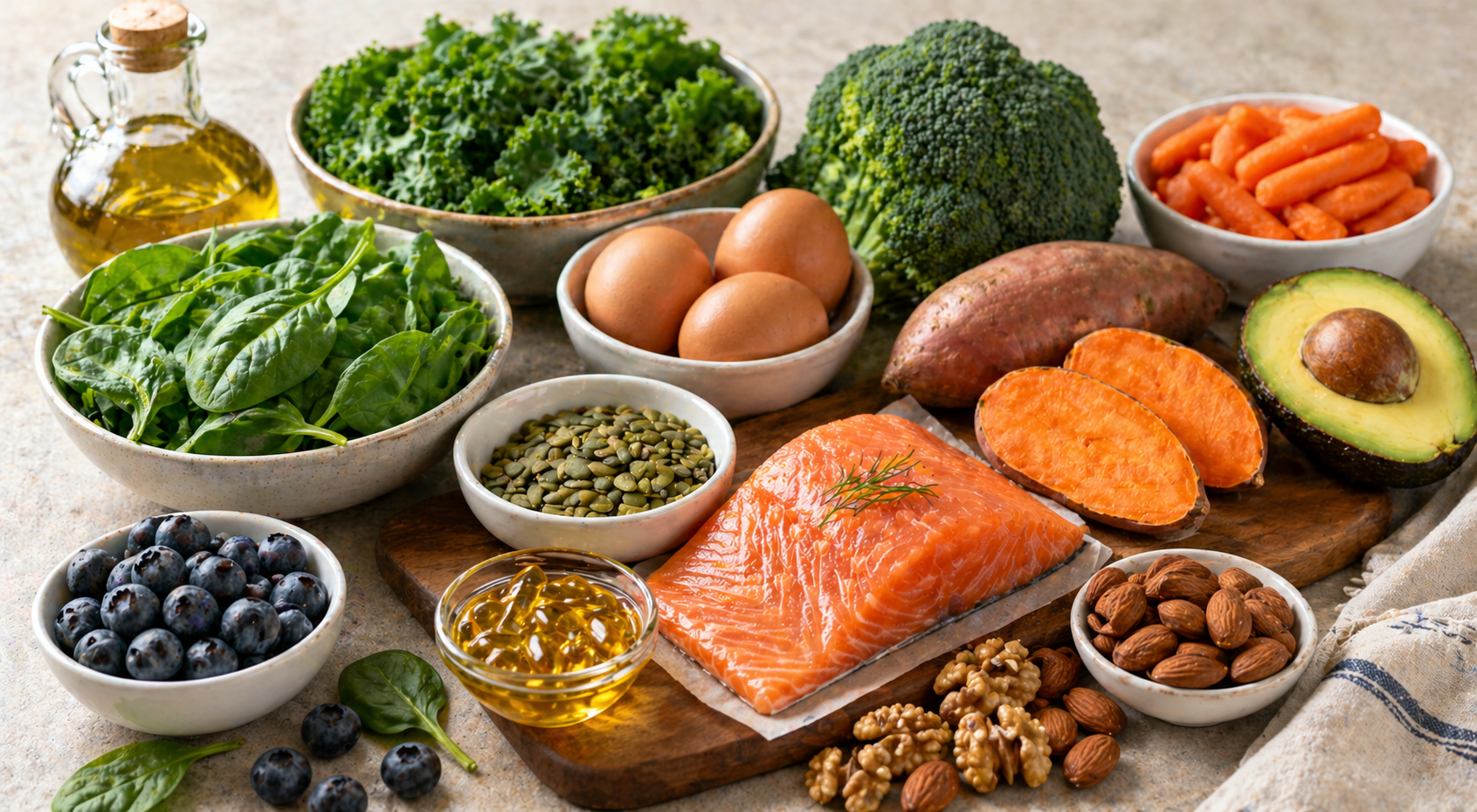
A variety of nutrients play a role in eye health. Leafy greens like spinach and kale contain lutein and zeaxanthin, which help protect the retina. Orange and yellow vegetables such as peppers and squash provide vitamin A. Fatty fish like salmon contain omega-3 fatty acids that support retinal function, while dairy products and eggs also contribute important vitamins.
A balanced diet that includes a range of these nutrients supports overall eye health, but no single food can improve refractive vision or replace regular eye care.
5. Crossing your eyes will make them stay that way

This is a common myth often told to children. Your eye movements are controlled by small muscles that allow your eyes to move in different directions and then return to normal alignment. Crossing or rolling your eyes does not cause any lasting change, and your eyes will not get “stuck” in that position.
However, if you notice one eye turning in, out, up, or down on a regular basis, this could be a sign of an eye alignment issue called strabismus. In that case, it is a good idea to see your optometrist for an eye exam.
It is important to rely on trustworthy information and to consult your optometrist if you have any concerns about your eye health. Your eyes are sensitive and deserve proper care, so it’s best to skip the DIY experiments like using honey to change your eye colour or crushing Oreo cookies for homemade eyeliner. Regular eye exams are an essential part of maintaining healthy vision, and your optometrist can provide personalized advice to keep your eyes at their best!
Book an appointment with one of our optometrists today to ensure your eyes stay in great shape!
-
Boy Wearing Glasses: Image generated with ChatGPT (DALL·E) by OpenAI
Normal Vision vs Red-Green Colour Deficiency: Image generated with ChatGPT (DALL·E) by OpenAI
Food Sources: Image generated with ChatGPT (DALL·E) by OpenAI
Girl Rolling Her Eyes: Image generated with ChatGPT (DALL·E) by OpenAI